Home Studio vs. Tour Bus: How Environment Shapes a Musician’s Creative Process

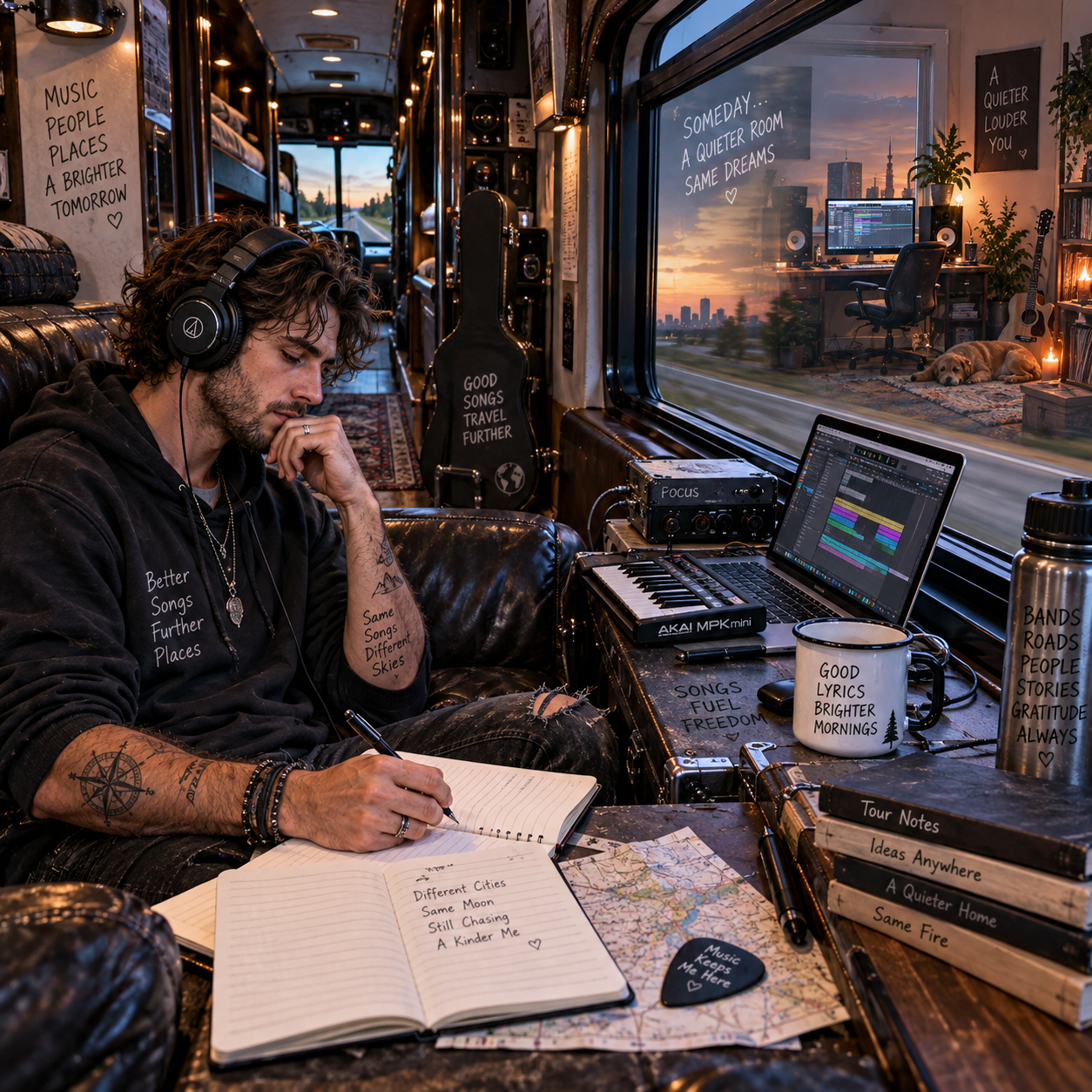
A song can begin in a carefully treated room or in the narrow space between a bunk, a coffee cup, and the next venue. For touring musicians, the creative process changes with every environment. A home studio offers privacy, reliable equipment, and time to concentrate; a tour bus brings movement, interruptions, and unexpected moments that can make an idea feel urgent.
This contrast matters beyond microphones and software. Songwriting and music production are shaped by sleep, relationships, travel, family responsibilities, and the emotional rhythm of life on the road. The setting becomes part of the story, which is why documentary storytelling can reveal details that a finished recording often hides.
Two Creative Worlds: Home Studio and Tour Bus
A home studio provides a controlled creative environment, while a tour bus is a shared, mobile workspace shaped by travel. Each setting supports a different stage of artistic thinking.
At home, a musician can decide when the work begins and ends. The room may have familiar speakers, instruments within reach, and a desk arranged for long sessions. Outside noise is easier to manage, and a producer can return to the same project the next morning without rebuilding the setup.
A tour bus reverses many of those conditions. The floor vibrates, engines hum, doors open, and people move through the same limited space. A quiet afternoon may turn into a rushed soundcheck, while a late-night drive can create an unusually private window for writing. The bus is both workplace and living space, so creative focus competes with meals, conversation, rest, and logistics.
The useful comparison is not comfort versus discomfort. It is depth versus immediacy. Home often supports extended decisions and detailed refinement. The road encourages musicians to capture what is happening before the moment disappears.
The Home Studio: Focus, Control, and Familiarity
A home studio supports deeper songwriting and music production because it combines privacy, stable acoustics, familiar tools, and a repeatable routine.
Songwriting benefits from uninterrupted attention. A musician can test several chord changes, leave a lyric unfinished, cook dinner, and return to the same emotional question later. That flexibility makes room for revision, which is often where a vague feeling becomes a clear verse or chorus.
Music production also gains from control. Consistent monitor placement, known room acoustics, and a permanent recording setup help an artist notice small changes in vocal tone, arrangement, and dynamics. Instruments can remain connected, allowing experimentation without the friction of unpacking equipment or searching for cables.
Why routine changes the work
A creative routine does more than organize time. It reduces the number of practical decisions competing with the work. Beginning with a short writing block, a focused listening session, or one arrangement problem can be more effective than waiting for a dramatic burst of inspiration.
Home life can also bring interruptions. Children, partners, household responsibilities, and ordinary fatigue do not disappear because a studio exists. Yet those interruptions can provide emotional material and keep the work connected to real relationships rather than abstract perfection.
The limitation is that familiarity may become predictable. A home studio can encourage endless polishing, especially when there is no deadline. Choosing control means accepting the risk of overthinking. A track may sound technically finished while losing the rough quality that made the original idea compelling.
The Tour Bus: Constraints That Spark Creativity
A tour bus can stimulate songwriting by imposing limits on time, space, privacy, and equipment. Those constraints often push musicians toward direct ideas and fast decisions.
Writing on a bus requires a different sense of attention. A performer may record a melody quietly into a phone after a show, write a line while watching unfamiliar landscapes pass, or build a rhythm from the mechanical pulse of the vehicle. The environment supplies texture: engine noise, dim lighting, cramped seats, and the changing mood of the passengers.
These conditions can produce creative urgency. When only twenty minutes are available before departure, a musician may stop judging an idea and simply preserve it. That speed is valuable during touring, when a perfect arrangement is less important than remembering the emotional shape of a song.
Privacy remains a serious challenge. Headphones can create a small boundary, but they cannot remove the awareness that other people are sleeping, talking, or working nearby. Vocals may need to wait until a quieter location, and full-volume experimentation is usually impossible. A bus is therefore well suited to capturing ideas, sketches, lyrics, and rough arrangements, while detailed recording may require a venue room, hotel, rehearsal space, or home studio.
Travel also changes perception. A musician who writes at home may draw from memory; a musician writing between cities is responding to constant transition. The song becomes connected to distance, absence, anticipation, and the strange routine of arriving somewhere new every day.
Technology and Portable Production on the Road
Portable production works best when it preserves inspiration quickly and leaves complex editing for a quieter environment. A practical mobile setup should be small, reliable, and easy to use while tired.
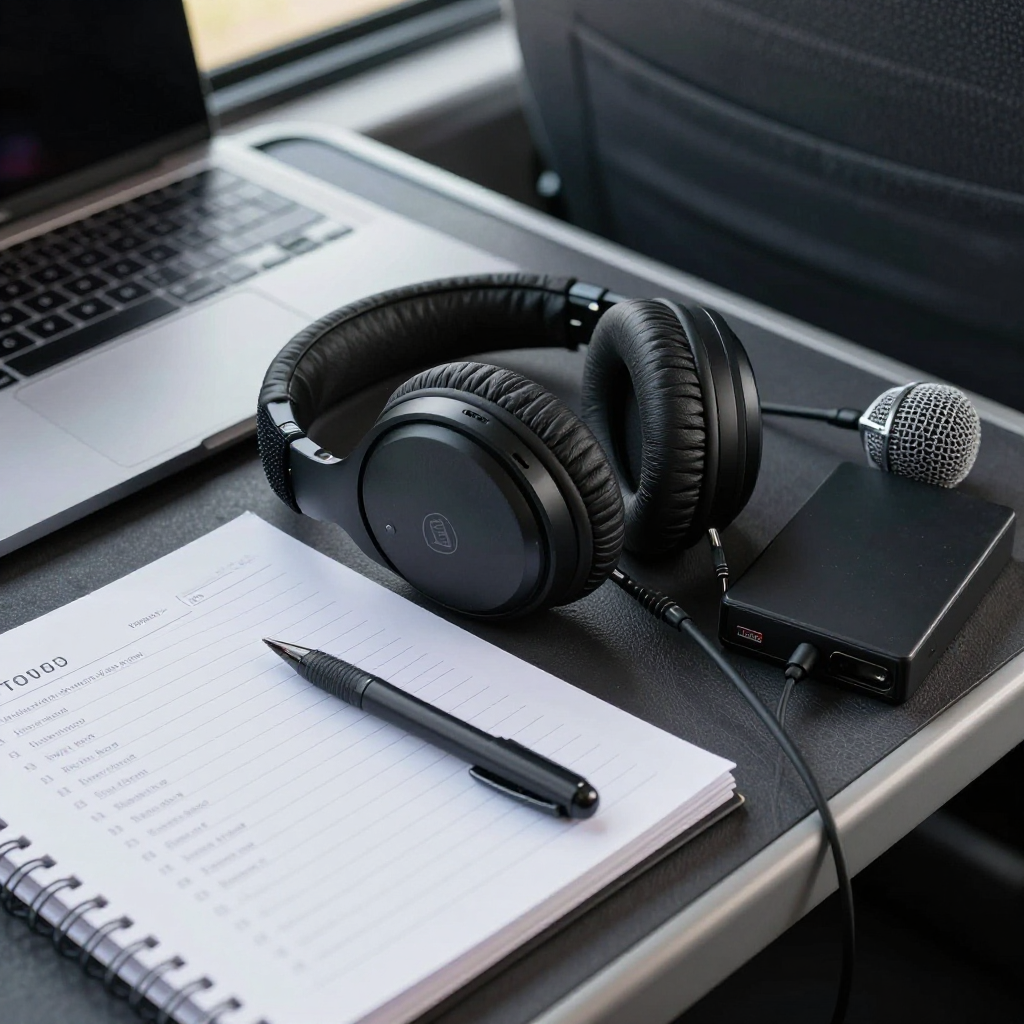
Useful portable recording equipment may include a smartphone or compact recorder, closed-back headphones, a small USB microphone, a laptop or tablet, a compact audio interface, spare cables, and a dependable power solution. The exact gear matters less than reducing the distance between an idea and its first recording.
- Capture: record voice memos, lyric fragments, guitar patterns, rhythmic sounds, and spoken descriptions of the intended mood.
- Label: add the date, location, tempo estimate, and one sentence explaining what the idea needs.
- Back up: keep copies on a cloud service and a separate drive when possible, especially after several travel days.
- Develop: use headphones for arrangement sketches, edits, and demo vocals without disturbing the bus.
- Collaborate: send stems or rough mixes to bandmates, producers, and co-writers with clear questions rather than vague requests for feedback.
Remote collaboration can keep a project alive, but it introduces delays and translation problems. A collaborator may hear a rough demo as a finished direction, or miss the emotional intention behind a simple recording. Short voice notes explaining the feeling, reference point, and open decision often help more than a long message.
Portable tools also have limits. Laptop speakers and headphones cannot always reveal how a mix will behave in a larger room. A bus recording may contain background rumble or inconsistent vocal levels. The goal is not to pretend that a mobile demo equals a final master. It is to protect the idea until the musician reaches a better listening environment.
How Touring, Family, and Daily Life Influence the Work
Touring affects creative work through relationships, fatigue, shared space, and the emotional demands of being away from home. Family life on the road can interrupt the process, but it can also give songs their deepest subject matter.
A touring musician may spend the morning handling messages from home, the afternoon traveling, the evening performing, and the night trying to sleep near unfamiliar voices. Creative work must fit around those responsibilities. The resulting schedule is rarely a clean block of artistic time.
Family members who travel with the band may share the bus, hotels, and meals. Their presence can provide stability and companionship, yet it also means that the musician’s workplace has no clear boundary. A parent may need to choose between finishing a vocal idea and helping with bedtime. A partner may become an emotional sounding board, even when both people are exhausted.
These realities influence subject matter and performance. A lyric about distance may come from missing a child, managing a relationship through video calls, or watching a family member adapt to constant movement. Documentary storytelling can make these connections visible by following the ordinary moments around the music: packing cases, waiting backstage, eating together, and finding ten quiet minutes in a crowded day.
Fatigue deserves honest attention. Lack of sleep can produce unusual associations, but it can also weaken judgment and patience. A sustainable creative practice treats rest as part of production rather than an obstacle to it. Some ideas should be captured immediately; major artistic decisions can wait until the mind is clear.
Comparing the Creative Process Step by Step
The creative process follows the same broad journey in both environments, but the pace, tools, and quality of attention change from home studio to tour bus.
1. Starting the idea
At home, a musician may begin with an instrument, production template, or planned writing session. On a tour bus, ideas more often begin with a lyric fragment, melody, field recording, or emotional reaction to the day.
2. Shaping the material
The home studio allows multiple versions and long pauses. The bus favors quick loops, shorthand notes, and rough demos that preserve the central hook before the next obligation arrives.
3. Recording the first version
Home recording usually provides better monitoring and acoustic control. Mobile recording depends on positioning, headphone monitoring, and accepting environmental noise. A simple recording made at the right moment can be more useful than a polished take made after the feeling has faded.
4. Revising the arrangement
Detailed editing, layering, vocal comping, and mix decisions are easier at home. On the road, a musician may make structural notes, exchange stems with collaborators, or test a chorus in a rehearsal setting.
5. Completing the track
Completion usually benefits from a stable environment where the artist can compare versions and make decisions without constant travel. The tour bus remains valuable as an idea generator and listening space, particularly for evaluating whether a song still feels alive after repeated playback.
This sequence suggests a useful division of labor: the road gathers evidence, while the home studio interprets and refines it.
Finding a Sustainable Creative Rhythm
A sustainable creative rhythm combines the home studio’s depth with the tour bus’s immediacy, using each environment for the work it supports best.
Before a tour, musicians can prepare lightweight templates, organize folders, charge batteries, and agree on a simple file-naming system. During travel, the priority should be capture rather than perfection. After returning home, a review session can sort ideas into three groups: develop now, archive for later, or release without further complication.
- Use the home studio for deep writing, full production, critical listening, and final decisions.
- Use the tour bus for observation, lyric writing, melody capture, rough demos, and emotional reflection.
- Protect family time by setting realistic creative windows instead of treating every free minute as studio time.
- Schedule recovery after demanding travel before judging unfinished work.
- Share early material selectively so collaboration adds momentum rather than creating unnecessary pressure.
There is no universally superior creative environment. A home studio can support precision but invite perfectionism. A tour bus can generate immediacy but restrict sound, privacy, and rest. Together, they form a larger creative ecosystem in which travel supplies experience, family gives that experience meaning, and production turns scattered moments into a finished record.
Frequently Asked Questions
Can musicians produce professional work on a tour bus?
Yes, musicians can create professional demos and sometimes complete production on a tour bus, especially with headphones, a reliable laptop, and a compact interface. Noise, vibration, limited monitoring, and power access make final mixing more difficult, so critical decisions often benefit from a controlled studio.
What equipment is useful for a mobile recording setup?
A practical mobile setup may include a phone or recorder, closed-back headphones, a compact microphone, USB audio interface, laptop or tablet, spare cables, storage, and backup power. Choose equipment that can be used quickly rather than a large collection that complicates travel.
How does touring affect songwriting?
Touring exposes musicians to changing places, pressure, separation, performance energy, and unusual daily routines. Those experiences can create immediate lyrical material, although fatigue and limited privacy may make sustained revision harder.
Is a home studio better for creativity than a tour bus?
A home studio is generally better for focused writing, detailed production, and finishing tracks. A tour bus can be better for spontaneous ideas and honest first drafts. The stronger approach depends on the stage of the creative process.
How can musicians balance touring, family life, and creative work?
They can set realistic work windows, communicate expectations with family, protect sleep, and separate idea capture from demanding production tasks. A short, clearly defined session is often more sustainable than trying to maintain a full studio schedule while traveling.