Reintegration: The Challenge of Returning Home After a Long Tour

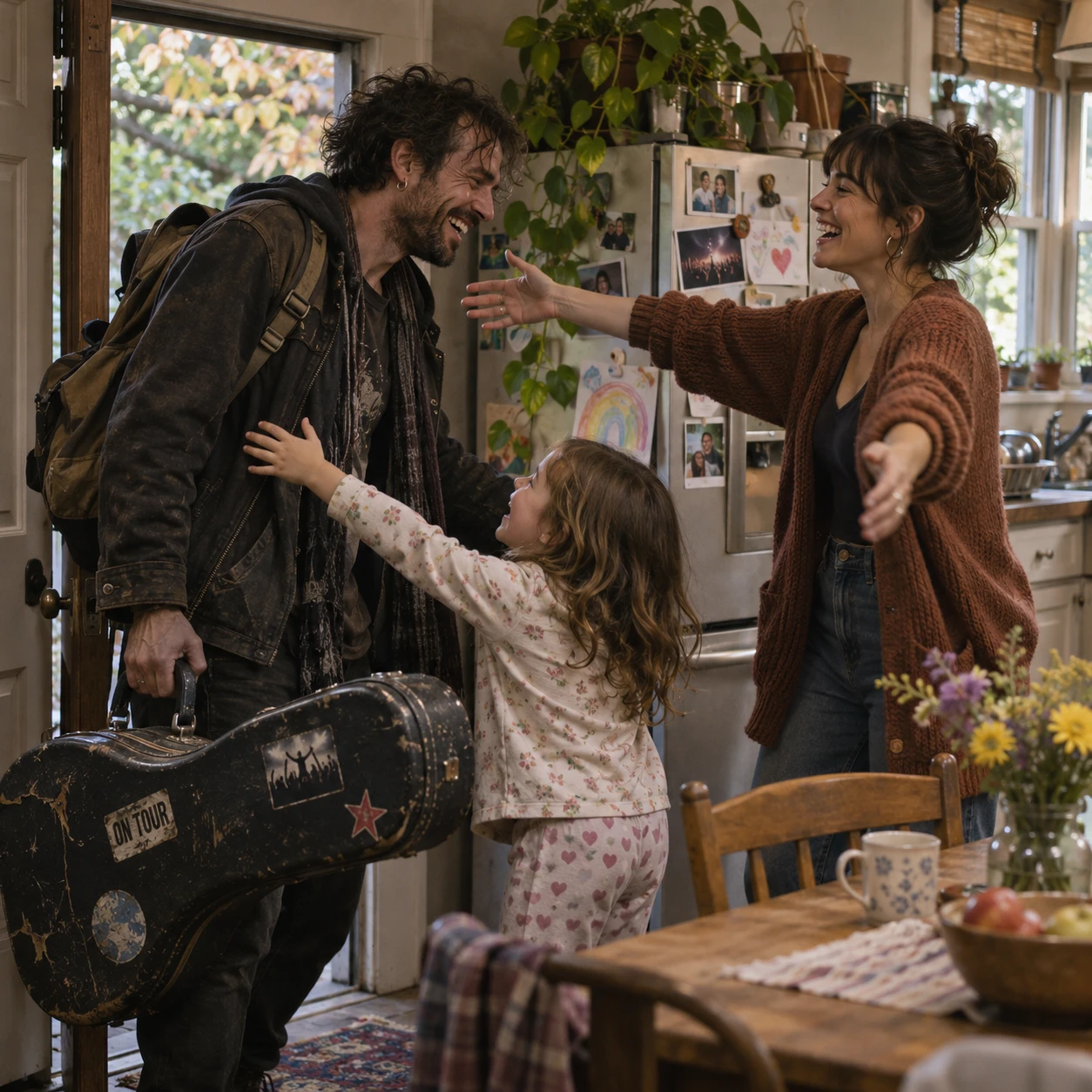
After weeks or months on the road, a musician may expect homecoming to feel like a simple return to normal. Instead, it can bring excitement, relief, fatigue, and uncertainty all at once. Family members have kept life moving in the musician’s absence, while the returning person has grown used to the pace and demands of touring.
Reintegration is the gradual process of finding a shared rhythm again. It is not automatically a crisis, and no two families experience it in the same way. For a documentary, that uncertainty offers a rich subject: the small, revealing moments when road life meets family life.
Life on tour versus life at home
Life on tour is shaped by travel, performance schedules, and constant change, while home life usually depends on familiar routines and shared responsibilities. Returning means moving between two different ways of organizing time and attention.
A tour can be demanding but highly structured. There may be a sound check, a performance, a drive to the next city, and a new venue or hotel each day. Decisions often happen quickly, and the musician’s focus centers on the show and the people keeping the tour moving. Even with long stretches of waiting, the day is organized around what happens next.
At home, the schedule may look less dramatic but carry its own weight: school pickups, meals, work, appointments, and chores. Partners and children often establish a workable routine while the musician is away. That routine can feel steady to them, even if it looks unfamiliar to the person returning.
The contrast is not simply freedom on the road and constraint at home. Touring can mean intense work, little privacy, and physical exhaustion; home can offer comfort alongside obligations and negotiations. Each setting has its own demands, and reintegration begins when the family recognizes that both realities are real.
Why coming home can feel complicated
Coming home after a long tour can feel complicated because several emotions and practical adjustments arrive together. A musician can be glad to see family while also tired, disoriented, or unsure how to rejoin a routine that continued without them.
Homecoming is often imagined as a single emotional payoff: the door opens, everyone reunites, and the distance disappears. In real life, welcome and adjustment can overlap. The musician may need rest after travel, while family members may want conversation, help, or time together. Neither response means the reunion matters less.
There can also be a change in pace. On tour, the next commitment is usually clear. At home, quieter stretches may leave a returning musician unsure what to do, while the family expects them to pick up ordinary responsibilities. Meanwhile, the people who held down the household may need time to make room for another person’s preferences again.
A useful way to think about the transition is as a three-part landing: physical recovery, emotional reconnection, and practical renegotiation. These stages do not follow a strict order. A family might share a meal before discussing chores, or need a day of quiet before either feels ready to talk.
The impact on partners and children
A long tour affects partners and children through absence, changed routines, and the ways each family member adapts. When the musician returns, everyone may need time to learn how to share space and responsibilities again.
A partner at home may have taken on extra decisions, from managing school logistics to handling household repairs. That work can become a normal routine, even if it began as a temporary response. The returning musician may want to help but not know which tasks are already covered or how the household now prefers to handle them.
Children’s responses vary with age, temperament, and the length and frequency of separations. A child might rush to reconnect, act shy, or carry on with play. These reactions are not reliable measures of affection. Children often communicate through behavior and routine, so a familiar bedtime or an ordinary trip to the park may create a better opening than a demand for an emotional reunion.
Partners, too, may feel both happiness and guardedness. They may be pleased the musician is home and still wary of losing a hard-won rhythm. Family members have their own version of the homecoming; making space for those perspectives helps prevent one person’s experience from defining the entire reunion.
Rebuilding connection and routines
Families can make reintegration smoother by communicating early, reconnecting through manageable shared time, and agreeing on how responsibilities will work. Small, specific steps are usually more helpful than expecting everyone to return to an old routine immediately.
- Talk before arrival. Share practical details such as travel fatigue, upcoming commitments, and what each person hopes the first day will look like. This helps avoid mismatched expectations.
- Start with low-pressure time. A meal, walk, or familiar bedtime routine can create a chance to reconnect without requiring a big emotional conversation.
- Ask before taking over. Check how household routines have changed and which tasks would genuinely help. Good intentions can cause friction if they disrupt a system that is working.
- Make a short-term plan. Decide who handles key responsibilities for the first few days, then revisit the plan once the musician has recovered and everyone has seen what works.
- Keep communication open. A brief check-in can surface practical concerns before they harden into resentment. Ask what feels easier now and what still needs attention.
These ideas are not a formula for every household. A family with young children may need predictable routines from day one, while another may prefer an unplanned afternoon together. The aim is to make expectations visible and flexible, rather than assume the return will settle everything on its own.
The musician’s adjustment to everyday life
A musician’s adjustment to everyday life often involves shifting from the intensity and structure of touring to a quieter pace with shared obligations. The challenge can be practical as well as emotional: sleep, attention, and habits formed on the road may not fit home life right away.
Touring can keep a person in performance mode, moving between sound checks, shows, travel, and brief periods of rest. At home, there may be no obvious cue that signals when the workday ends. The musician might need time to decompress, but family members may reasonably expect them to be present and involved.
Rather than treating this as a character flaw or a family failure, it helps to name the adjustment. A musician can explain, for example, that they need a quiet hour after travel, while also agreeing to take responsibility for dinner or bedtime afterward. Specific plans make it easier to balance recovery with participation.
Returning musicians can also ask questions before assuming they know the household’s current needs: What has changed since I left? Which routines matter most to the children? What should I take on this week? Listening is part of the work of coming home. Choosing to rest is valid, but it has a trade-off if others are carrying the practical load; a clear conversation can help the family share that burden fairly.
What documentaries can reveal about homecoming
Documentary filmmaking can show reintegration as a gradual change in family dynamics rather than a neat reunion scene. By observing ordinary interactions over time, a film can make visible what each person gives up, expects, and learns as the musician returns.
The most revealing moments may be modest: a half-finished conversation, a child keeping to a familiar routine, a partner asking where something belongs, or the musician waiting for a cue that never comes. These details let viewers see the distance between road life and home life without turning family members into characters in a manufactured conflict.
Ethical documentary storytelling also requires restraint. A camera can intensify a private moment, so filmmakers should consider consent, especially when children appear, and allow participants room to decline or pause. Filming the everyday does not make it less personal. The goal is to observe family life with care, not to force a dramatic conclusion.
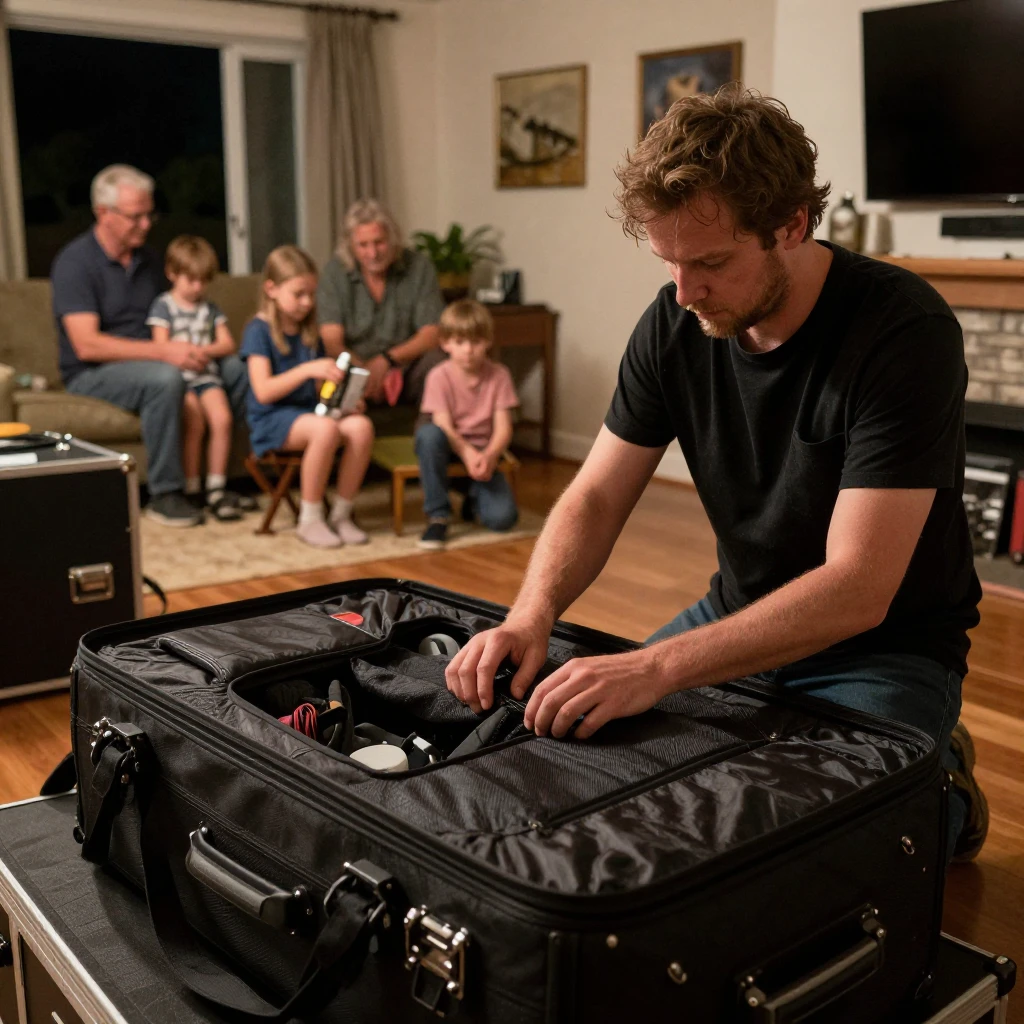
When a documentary holds the perspectives of the musician, partner, and children together, it can resist an easy narrative of either abandonment or perfect reunion. The result is a more truthful portrait: homecoming as a series of small negotiations, shaped by affection, fatigue, and the routines people built while apart.
Frequently asked questions about returning home after a tour
Returning home can raise practical and emotional questions for musicians and families. These concise answers address common concerns without assuming every household has the same experience.
Why can returning home after a tour be difficult?
Travel fatigue, a sudden change in pace, and routines established during the musician’s absence can make the transition feel unfamiliar. Relief and excitement can coexist with a need to rest or adjust.
How can touring affect family relationships?
Touring can mean less in-person time and can shift more household responsibilities to the people at home. The effect depends on the family, the tour schedule, and how members communicate and stay connected.
What can musicians do to reconnect after time away?
They can ask what has changed, listen without rushing to fix everything, and join familiar routines through specific, manageable commitments. Regular check-ins help the family adjust those commitments as needed.
How can a documentary portray reintegration authentically?
A documentary can follow ordinary interactions over time, include family members’ different perspectives, and avoid staging conflict for a more dramatic reunion. Clear consent and care around private moments are essential, particularly when children are involved.